On the following pages you will find information about Vipassana.
About Vipassana
Introduction to the Technique and Participation Requirements
Vipassana is one of India’s most ancient meditation techniques. Long lost to humanity, it was rediscovered by Gotama the Buddha more than 2500 years ago. The word Vipassana means seeing things as they really are. It is the process of self- purification by self-observation. One begins by observing the natural breath to concentrate the mind. With a sharpened awareness one proceeds to observe the changing nature of body and mind and experiences the universal truths of impermanence, suffering and egolessness. This truth-realization by direct experience is the process of purification. The entire path (Dhamma) is a universal remedy for universal problems and has nothing to do with any organized religion or sectarianism. For this reason, it can be freely practiced by everyone, at any time, in any place, without conflict due to race, community or religion, and will prove equally beneficial to one and all.
Read more »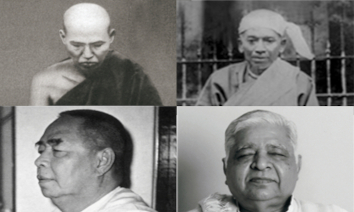
The Tradition
This dedicated lineage transmitted the technique in its pristine purity. Five centuries after the Buddha, the noble heritage of Vipassana had disappeared from India. The purity of the teaching was lost elsewhere as well. In the country of Myanmar (Burma), however, it was preserved by a chain of devoted teachers. From generation to generation, over two thousand years, this dedicated lineage transmitted the technique in its pristine purity.
Read more »
Revival of Vipassana
Vipassana was taught more than 2500 years ago by Gotama the Buddha. Since then this technique of meditation has been continually passed on from teacher to student.
Read more »
Development of the German Vipassana Association
First Courses In 1983, the first Vipassana meditation course in this tradition took place in a youth hostel in Germany. Due to a lack of suitable premises, it then took another two years before at least one or two German-language 10-day courses could be offered each year in various rented houses in Germany and neighbouring countries between 1985 and 1994. The Vipassana Association Germany, which was founded to organise and run the courses, was granted non-profit status in 1987. In 1994, an ageing former hotel was rented on very favourable terms in Bad Herrenalb in the northern Black Forest, just an hour's drive from today's second meditation centre, Dhamma Sampatti. It was converted into a Vipassana meditation centre (‘Dhamma Geha’). This was the first time a continuous course programme was offered in Germany. At the same time, a search was conducted throughout Germany for a property that met all the criteria to become the first German Vipassana centre. Due to the growing demand, the Dhamma House soon reached the limits of its capacity.
Read more »